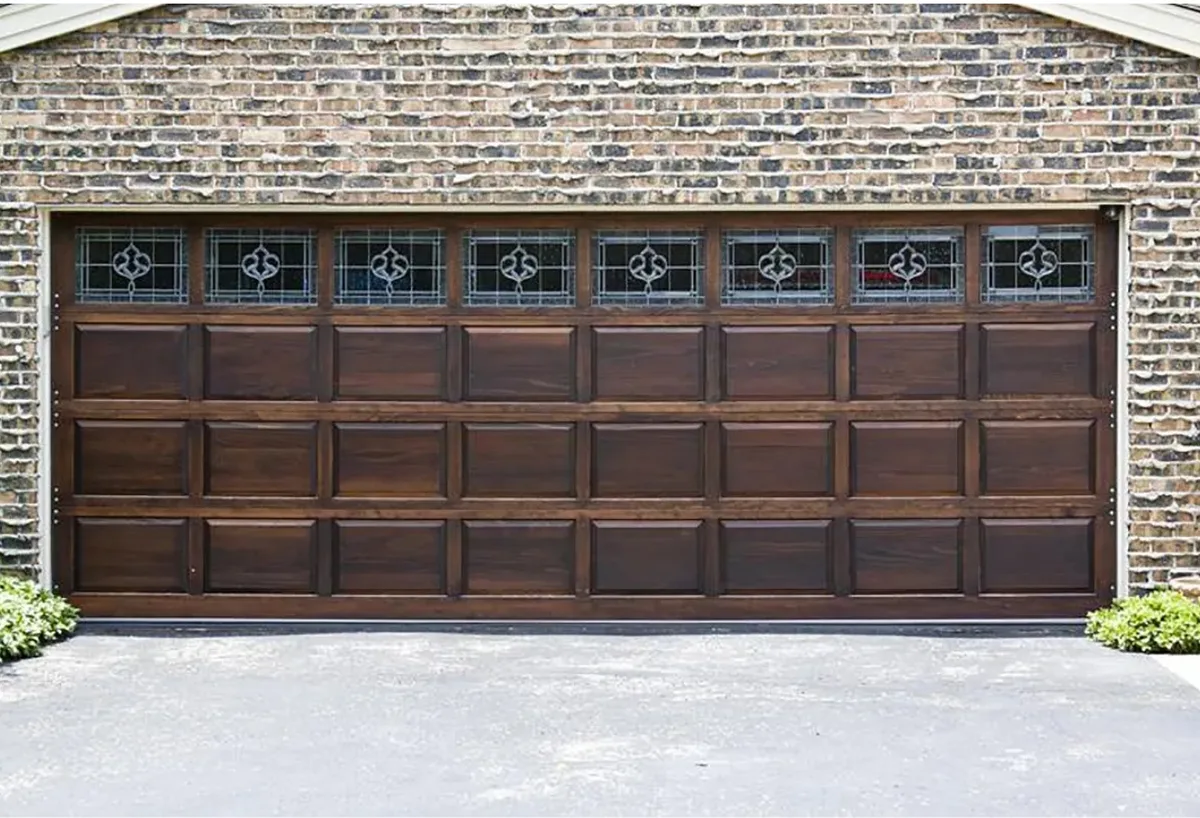
How to Improve Your Home's Curb Appeal with a New Garage Door
A garage door covers 30 to 40 percent of most homes' street-facing front. When it's outdated, faded, or the wrong style for the house, it pulls down the entire exterior regardless of how well the rest of the property looks. Replacing it is one of the fastest, highest-return curb appeal improvements available. The table and chart below show how a full replacement compares to lower-cost alternatives so you can decide which approach fits your situation.
Why does a garage door have such a large effect on curb appeal?
Most homes have a single, wide garage door as the dominant visual element on the front facade. The average two-car garage opening is 16 feet wide and 7 feet tall. On a standard suburban home, that's a substantial portion of what someone sees at street level. An outdated, dented, or faded door signals deferred maintenance even if the rest of the property is in excellent shape. A new door signals the opposite.
Garage door replacement also consistently recovers close to its full cost at resale, outperforming most other exterior improvements. It's one of the few home upgrades where curb appeal and financial return point in the same direction. For the full buying decision framework, see our complete garage door buyer's guide.
How do you choose a style and design that actually improves your home's look?
The most common mistake is choosing the door you like in a showroom without checking whether it matches your home's architecture. A contemporary flush door looks wrong on a craftsman bungalow. A heavy raised-panel door with decorative grids can look cluttered on a modern build. Start with your home's existing architectural language.
- Traditional ranch, colonial, and craftsman homes suit raised-panel and carriage-house styles. Match the panel lines to the home's window proportions.
- Contemporary and modern builds suit flush-panel, bold-color, and full-view glass styles. Clean lines read well against large windows and horizontal siding.
- Farmhouse and Tudor homes suit carriage-house doors with decorative hardware, crossbeam overlays, and warm finishes.
Once the style and panel design are set, the color choice becomes the fine-tuning step. You can match the door to the trim, contrast it with the siding, or use a bold accent color if your neighborhood's character supports it. A color that coordinates with the front door, shutters, and roof line reads as intentional. A random color choice reads as an afterthought. For more on color options across different door types, see our guide to painting garage doors.
What decorative details give the most visual return for the cost?
Three additions make a disproportionate visual difference on a new or existing door.
Windows are the highest-impact single addition you can make to any garage door. Upper-panel windows let in natural light and break up what would otherwise be a flat, unbroken surface. Window designs range from plain rectangular panes to divided-light patterns and frosted or tinted glass for privacy. They also make the door read as more custom even on a standard-spec model. For specific options, see our window options FAQ.
Decorative hardware can make any door look like a carriage-house model. Handle and hinge overlays, faux pivot hardware, and strap-style hinges are applied to the door face. They're inexpensive and available in several finishes, including black iron, brushed nickel, and oil-rubbed bronze. On a steel raised-panel door, this $50 to $300 upgrade can deliver a meaningful look change.
Color is the most DIY-accessible curb appeal tool. A door that was painted in the early 2000s and has faded, chalked, or chipped is doing real visual damage. A fresh coat in the right color can restore or lift the exterior significantly. For custom and specialty finishes, a factory finish holds better than field painting, but painting an existing steel door is entirely viable for mid-career refreshes.
When does it make sense to replace the full door versus upgrading what you have?
The comparison table above covers this in detail, but the clearest cases for a full replacement are:
- The door has significant damage: panels that are dented through, sections that have warped, or a bottom section that no longer seals against the floor.
- The door is more than 15 to 20 years old and showing its age in multiple ways at once: faded finish, slow opener, visible wear on rollers and springs.
- The style is fundamentally mismatched to the home and no surface upgrade corrects it.
- You're preparing to sell and want the curb appeal improvement and financial return that a new door delivers.
For situations where the door's structure is sound but it looks tired, painting, hardware, or windows are legitimate lower-cost options. For help deciding which path fits your situation, see our guide to knowing when to replace your garage door.
How does the material choice affect long-term curb appeal in Colorado?
In Colorado, curb appeal and material durability are connected. A door that looks great on installation day but fades, chips, or warps within three years is a curb appeal problem, not just a maintenance one.
Insulated steel and composite doors hold their finish longest under Colorado's UV load and freeze-thaw cycling. Real wood doors look the best initially but require the most active maintenance to keep that look. Aluminum holds its finish well but can dent, which shows clearly on a door's face. For the full material breakdown, see our garage door material guide. And if you're looking for local style inspiration, our Denver garage door styles roundup covers what's trending across the metro.
Ready to see what a new door would do for your home's front? Get a free estimate and we'll measure your opening, bring samples, and walk you through what fits your home and your budget.
Curb appeal upgrade options compared
How a full door replacement compares to lower-cost curb appeal improvements, by visual impact, difficulty, and typical cost.
| Upgrade | Visual impact | DIY or pro? | Typical cost | Best when |
|---|---|---|---|---|
| Replace full door | Very high | Professional | $1,200 to $6,000 installed | Door is aged, damaged, or wrong style for the home |
| Repaint the door | Medium | DIY possible | $100 to $400 materials | Door is in good shape but the wrong color |
| Add or replace windows | Medium to high | Professional | $300 to $800 added to door | Bring in natural light, add character to a plain door |
| Add decorative hardware | Medium | DIY | $50 to $300 | Get the carriage-house look without full replacement |
| Replace opener only | Low curb appeal, high convenience | Professional | $300 to $800 | Door looks fine but the opener is old or noisy |
Costs are approximate and vary by door size, material, and installer. Get a written estimate before committing to any option.
Typical installed cost for a new 2-car garage door by style
- Traditional raised-panel
- $800 to $3,000
- Steel flush panel
- $1,200 to $3,500
- Carriage-house (steel)
- $1,500 to $5,000
- Full-view glass
- $2,000 to $6,000
- Custom wood or composite
- $2,500 to $6,000+
Garage door replacement ranked as the top home improvement project for cost vs. value in 2023, recovering more of its cost at resale than kitchen remodels, deck additions, or bathroom renovations.
Source: Remodeling Cost vs. Value Report 2023
Sources and references
- 1.Garage door replacement return on investment — Remodeling Cost vs. Value Report
- 2.Home exterior features and buyer preferences — National Association of Realtors
- 3.Residential garage door safety and product standards — Door and Access Systems Manufacturers Association (DASMA)
Part of this guide
Complete GuideThe Ultimate Guide to Choosing the Right Garage Door for Your Home- What Are the Top Garage Door Styles for Modern Homes?The right garage door style matches your home's architecture first, then your budget. Traditional raised-panel doors suit most homes. Carriage-house and contemporary styles add character. Here is how to choose between them.Read guide
- Selecting the Right Material for Your Garage DoorFor most Denver homes, insulated steel is the right material. It handles Colorado's freeze-thaw cycles, costs less than wood, and needs far less upkeep. Here is how every material compares before you buy.Read guide
Technical resources
Related services
G Brothers provides these services across the Denver metro, from Lakewood and Arvada to Centennial and Thornton.
Service areas
Local service for this guide
Explore the nearby service page most relevant to this topic.
Frequently asked questions
Does a new garage door increase home value?
Does a new garage door increase home value? Yes, near 190% at resale in Cost vs. Value reports, and it lifts curb appeal. Here's why it pays.
Read full answerCan I paint my garage door?
Can you paint a garage door? Yes, steel and wood doors take paint well with the right prep and a fade-resistant exterior paint. Learn the steps to use.
Read full answerShould I add windows to my garage door?
Garage door windows add light and curb appeal but affect privacy and insulation. See the window options, the tradeoffs, and how to choose for Colorado.
Read full answerCan I get a custom or carriage-style garage door?
Yes, we install custom and carriage-style garage doors in steel, wood, and composite. See how carriage doors work and pick the right material.
Read full answerWhen should you replace a garage door?
When to replace a garage door instead of repairing it: most last 15 to 30 years, but age, repeat repairs, and rising bills can tip the call to a new one.
Read full answerHave a garage door problem now?
Tell us what your door is doing and we will tell you what is likely wrong and what it costs. Same-day service across the Denver metro.