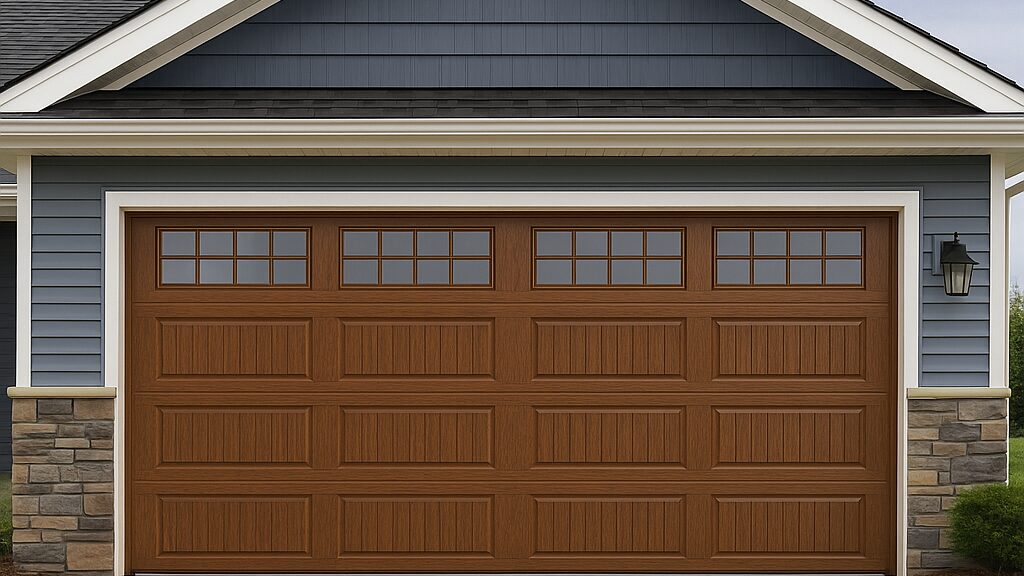
10 Tips to Keep Your Garage Cool in Summer
To keep your garage cool in summer, start with the two fixes that matter most: insulate the space and improve airflow. An insulated garage door blocks the heat coming through the largest opening in the room, and good ventilation moves trapped hot air out. Once those basics are in place, fans, light colors, tight seals, and a cooling unit handle the rest. Tackled in that order, even a hot Colorado garage becomes a usable space through the summer.
A garage that bakes in the afternoon is more than uncomfortable. The heat damages stored items, makes the space useless as a workshop, and creeps into the rooms next to an attached garage. Here are ten practical tips, starting with the ones that make the biggest difference.
1. Insulate the garage door and walls
Insulation is the highest-impact upgrade because it stops heat at the source. The door is usually the largest surface in the garage, so an insulated model with an R-value of 13 or higher blocks the most heat. Adding wall and ceiling insulation seals the rest of the envelope. Our pillar guide on insulated garage doors in Denver explains how to choose the right R-value.
2. Improve ventilation
Ventilation gives trapped hot air a way out. Exhaust fans on a wall or ceiling pull heat out, roof vents let rising hot air escape, and pairing an intake with an exhaust creates steady cross-flow. Good airflow alone can drop the temperature several degrees for very little cost.
3. Use fans strategically
Fans are the cheapest way to move air. Place a floor fan facing out of an open door to push hot air outside, use a ceiling fan in a high-ceiling garage to keep air circulating, and add a window fan to pull cooler evening air in. Combining a couple of fans for directional flow works better than one fan alone.
4. Choose light, reflective colors
Dark surfaces soak up heat. A light-colored or reflective garage door, light wall paint, and a reflective roof coating all bounce sunlight away before it becomes heat inside. Our guide to selecting the right material for your garage door covers finishes that reflect heat.
5. Seal gaps and weatherstrip
Hot air sneaks in through every gap. A fresh bottom seal on the door and weatherstripping around the frame and any windows keep that heat out, and they keep cooler air in. Seals harden and crack over time, so check them each year. A worn bottom seal is a quick fix covered in our garage door maintenance guide.
6. Park hot vehicles outside first
A car that has been running radiates heat for a long time after you park. Let it cool in the driveway or in shade before you pull it into the garage, then bring it in. It is a free way to keep a major heat source out of the space.
7. Control humidity with a dehumidifier
Humid air feels hotter and slows cooling. A dehumidifier pulls moisture out so the space feels cooler and drier. Colorado summers are usually dry, but a dehumidifier helps after monsoon storms or in a garage that traps moisture.
8. Declutter for better airflow
A packed garage blocks air and traps heat. Storing items vertically on shelves, clearing things away from vents and windows, and keeping the floor open all let air move freely so your fans and vents actually work.
9. Add shade outside the garage
Stopping the sun before it hits the building helps a lot. An awning or pergola over the door, trees or shrubs that shade the west and south walls, and a light or reflective roof all cut the heat load your cooling has to handle.
10. Add a cooling unit for Colorado's dry heat
Once the heat is kept out, active cooling finishes the job. A portable AC unit handles spot cooling, a ductless mini-split gives precise control for a garage used daily, and a swamp cooler works especially well in Colorado's dry climate by cooling through evaporation. Pair any of these with insulation so you are not cooling air that leaks straight back out.
When should you call a professional?
Fans, seals, shade, and decluttering are all easy do-it-yourself wins. Call a pro to install an insulated garage door, add wall insulation, or set up a mini-split, since those upgrades work best when they are sized and sealed correctly. Our guide to energy-efficient garage doors explains what to look for.
We install insulated, reflective doors with new garage door installation across Denver and the surrounding suburbs. Get a free estimate and we will help you turn a hot garage into a comfortable one.
Ways to keep a garage cool, ranked by impact
How the main cooling methods compare on cost and how much difference each one makes, so you can start with the upgrades that move the needle most.
| Method | Relative cost | Cooling impact |
|---|---|---|
| Insulate the door and walls | Medium | High |
| Improve ventilation | Low | High |
| Use fans strategically | Low | Medium |
| Seal gaps and weatherstrip | Low | Medium |
| Light or reflective colors | Low | Medium |
| Mini-split or swamp cooler | High | High |
Start with insulation and ventilation. Active cooling works far better once the heat is kept out first.
Garage cooling basics for Colorado
- Recommended door R-value
- R-13 or higher
- Best cooling upgrade
- Insulated door
- Swamp cooler fit (dry climate)
- Great in CO
- Seal lifespan
- ~3 to 5 years
An insulated garage door with an R-value of 13 or higher blocks most of the heat coming through what is usually the largest opening in the garage, the single most effective cooling upgrade.
Source: Door & Access Systems Manufacturers Association (DASMA)
Sources and references
- 1.Garage door insulation and R-value standards — Door & Access Systems Manufacturers Association (DASMA)
- 2.Efficient home heating and cooling guidance — ENERGY STAR
Part of this guide
Complete GuideInsulated Garage Doors in DenverTechnical resources
Related services
G Brothers provides these services across the Denver metro, from Lakewood and Arvada to Centennial and Thornton.
Frequently asked questions
Is garage door insulation worth it?
Is garage door insulation worth it? In Colorado's cold winters an insulated door cuts heat loss, noise, and drafts on an attached garage.
Read full answerWhat garage door R-value do I need in Colorado?
What garage door R-value do you need in Colorado? Aim for R-12 to R-18 on an attached or heated garage, and learn why the seal matters too.
Read full answerAre energy-efficient garage doors worth it?
Are energy-efficient garage doors worth it in Colorado? An insulated door cuts heating and cooling loss, blocks noise, and resists dents on a shared wall.
Read full answerWhat's the best garage door for Colorado weather?
The best garage door for Colorado weather is an insulated steel door with a quality finish. Here is how it holds up to cold, sun, and hail.
Read full answerHow do I replace the garage door bottom seal?
How to replace a garage door bottom seal: identify the retainer, measure the door width, slide out the old seal, and feed in the new one. A doable DIY job.
Read full answerWhat are the different garage door types?
What are the different garage door types? Compare steel, wood, aluminum, and glass, plus the main styles, to pick the right door for your home.
Read full answerHave a garage door problem now?
Tell us what your door is doing and we will tell you what is likely wrong and what it costs. Same-day service across the Denver metro.