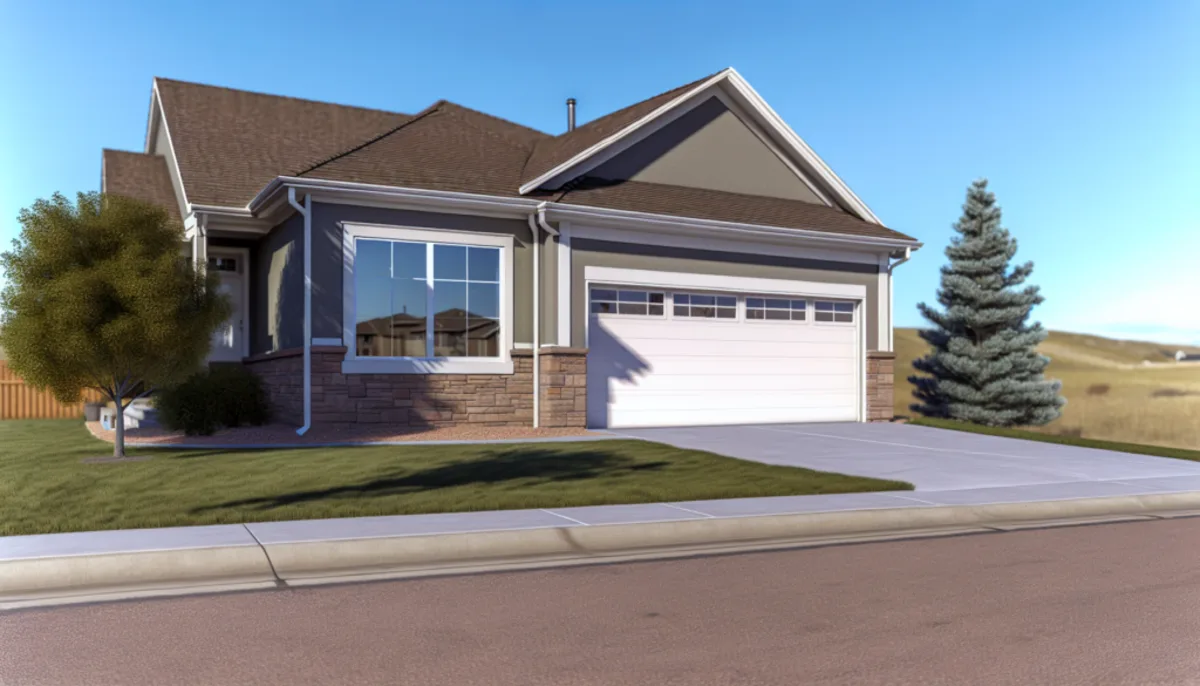
Insulated Garage Doors in Denver
Yes, an insulated garage door is worth it in Denver. It cuts heat loss in winter and heat gain in summer, quiets your home, and resists dents better than a standard door. For most Denver homes, aim for an R-value of R-12 to R-18 on an insulated steel door, especially if the garage is attached or heated.
Your garage is often the largest opening in your home's exterior wall, so an uninsulated door lets conditioned air escape and outside air pour in. That strains your HVAC system and raises your bills. Here is what insulation does in Colorado's climate, how to pick the right R-value, and what to look for.
Are insulated garage doors worth it in Denver?
For attached and heated garages, the answer is a clear yes. Denver's winters drop well below freezing and summers reach the 90s, so the door works hard to hold a stable temperature. An insulated door keeps the garage closer to room temperature, which matters most when the space shares a wall or a floor with living areas.
The combination of lower energy bills, better comfort, less noise, and added durability typically pays for the upgrade within about 5 to 7 years. After that, the savings keep coming. For a wider look at the numbers, see our guide to energy-efficient garage doors.
What R-value do you need for Colorado's climate?
R-value measures how well the door resists heat flow, and a higher number means better insulation. A standard non-insulated door has an R-value near zero, while quality insulated doors run from about R-8 to R-18. For Denver, R-12 to R-18 gives strong year-round performance.
The right number depends on how you use the garage. The table below breaks it down by garage type, and you can read more in our guide to how weather affects your garage door.
How much can you save on energy bills?
An uninsulated door is a major source of heat loss in winter and heat gain in summer. Upgrading to a properly insulated door cuts energy costs by roughly 10 to 15 percent for many homeowners, depending on garage size, how often you use it, and whether it is conditioned.
In Denver's cold, dry winters, an insulated door keeps warm air from bleeding out through the garage. In summer, it blocks radiant heat from coming through the large door surface. According to the U.S. Department of Energy, the payback on garage door insulation commonly lands within 5 to 7 years, after which the savings continue.
What other benefits do insulated doors offer?
Energy savings are only part of the story. An insulated door improves daily comfort in several ways:
- Quieter operation. The foam core dampens traffic, weather, and mechanical noise, which is a real benefit for rooms next to an attached garage.
- Better durability. The rigid core reinforces the panels, so the door resists dents and impacts better than a hollow one.
- Less condensation. Steadier interior temperatures cut the condensation that leads to rust, mold, and rot, a common issue in attached garages.
If summer heat is your main concern, our tips to keep your garage cool pair well with an insulated door.
How are insulated garage doors built?
Quality insulated doors use a polyurethane or polystyrene foam core sandwiched between steel or aluminum panels. Polyurethane is sprayed in and bonds to the panels, which gives a higher R-value and a stiffer, quieter door. Polystyrene comes in rigid sheets and costs less.
The core is not the whole picture. Look for doors that add weatherstripping and thermal breaks, which seal the air leaks around and between the panels. Those details are what turn a good R-value into real-world energy performance. We install doors from manufacturers that meet DASMA performance standards for thermal transmittance.
Which style and material should you choose?
Insulated doors come in materials and styles to match any home:
- Steel is the most popular choice for its mix of durability, insulation value, and price. It is our usual recommendation for Denver homes.
- Aluminum and glass give a sleek, modern look but insulate less than steel.
- Wood delivers classic beauty and can be well insulated, though it needs more upkeep in Colorado's sun and snow.
Styles range from traditional raised-panel to contemporary flush designs. For help weighing materials against Colorado weather, see our take on the best doors for the local climate.
Does an insulated door add home value?
A garage door is one of the largest features on the front of a house, so a clean, updated insulated door lifts curb appeal and signals a well-maintained home. Buyers read modern, energy-efficient features as a plus, which helps at resale.
If you plan to stay put, the upgrade pays you back in comfort and lower bills. If you plan to sell, it strengthens the first impression. Either way, an insulated door improves both how the home lives now and what it is worth later.
Why does professional installation matter?
Even the best door underperforms if it is installed poorly. Bad installation causes misalignment, air leaks, and mechanical wear that undercut both the energy savings and the safety of the high-tension spring system. A clean install also protects the manufacturer warranty.
Our techs install insulated doors across the metro with proper measurement, alignment, weatherstripping, and testing. To compare options for your home, explore our new garage door installation service, then get a free estimate or call (720) 421-6489. We serve homeowners throughout the Denver metro area, including Lakewood, Arvada, and Littleton.
Garage door R-value by garage type
How much insulation to choose for Denver's cold winters and hot, sunny summers, based on how your garage is used.
| Garage type | Recommended R-value | Why |
|---|---|---|
| Detached, unheated | R-0 to R-8 | Comfort matters less when the space is not conditioned |
| Attached, unheated | R-12 or higher | Shares a wall with living space, so heat loss reaches the house |
| Heated, or room above | R-16 to R-18 | Holds conditioned air and cuts strain on the HVAC system |
| Workshop or gym | R-16 to R-18 | Keeps a usable temperature year round |
Higher R-value means better resistance to heat flow. Pair it with weatherstripping for the full benefit.
What insulated garage doors deliver in Denver
- Typical energy savings
- 10 to 15%
- Recommended R-value range
- R-12 to R-18
- Payback period
- ~5 to 7 years
- Non-insulated door R-value
- ~R-0
Homeowners can cut energy costs by roughly 10 to 15 percent by upgrading to a properly insulated garage door, depending on garage use and how the rest of the home is sealed.
Source: U.S. Department of Energy guidance on insulation
Sources and references
- 1.Insulation, R-value, and sealing air leaks at home — ENERGY STAR
- 2.Garage door construction and performance standards — Door & Access Systems Manufacturers Association (DASMA)
- 3.Weatherstripping to reduce drafts and energy loss — ENERGY STAR
Explore this guide
- Energy-Efficient Garage Doors: What You Need to KnowAn energy-efficient garage door reduces heat loss through the largest opening in most homes. The two numbers that matter are R-value and a tight seal. In Colorado's climate, a well-insulated door eases the load on your HVAC year-round.Read guide
- How Weather Affects Your Garage Door and What You Can Do About ItWeather wears a garage door in three ways: temperature swings warp panels and stress springs, moisture causes rust and freezing, and wind strains the largest moving part of your home. Insulation, sealing, and maintenance protect it.Read guide
- 10 Tips to Keep Your Garage Cool in SummerTo keep your garage cool, start with the two biggest fixes: insulate the space and improve airflow. From there, fans, an insulated door, light colors, and tight seals make the most difference. Here are ten practical tips that work.Read guide
Technical resources
Related services
G Brothers provides these services across the Denver metro, from Lakewood and Arvada to Centennial and Thornton.
Frequently asked questions
Is garage door insulation worth it?
Is garage door insulation worth it? In Colorado's cold winters an insulated door cuts heat loss, noise, and drafts on an attached garage.
Read full answerWhat garage door R-value do I need in Colorado?
What garage door R-value do you need in Colorado? Aim for R-12 to R-18 on an attached or heated garage, and learn why the seal matters too.
Read full answerWhat's the best garage door for Colorado weather?
The best garage door for Colorado weather is an insulated steel door with a quality finish. Here is how it holds up to cold, sun, and hail.
Read full answerAre energy-efficient garage doors worth it?
Are energy-efficient garage doors worth it in Colorado? An insulated door cuts heating and cooling loss, blocks noise, and resists dents on a shared wall.
Read full answerWhy won't my garage door work in cold weather?
Why your garage door won't work in cold weather: stiff grease, contracted metal, a touchy opener, ice at the base, or a brittle spring. Denver fixes.
Read full answerDoes a new garage door increase home value?
Does a new garage door increase home value? Yes, near 190% at resale in Cost vs. Value reports, and it lifts curb appeal. Here's why it pays.
Read full answerHave a garage door problem now?
Tell us what your door is doing and we will tell you what is likely wrong and what it costs. Same-day service across the Denver metro.