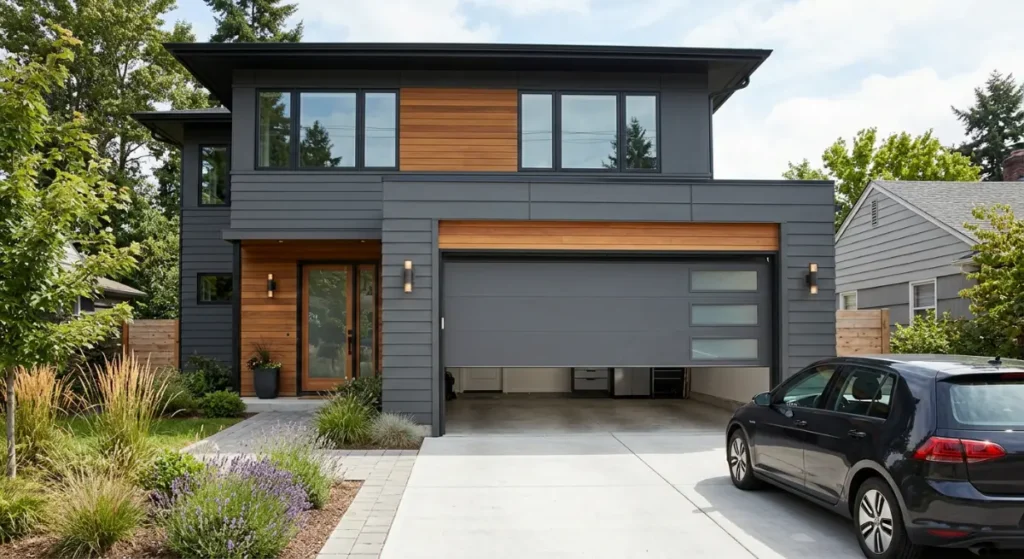
Garage Door Replacement: 7 Signs It's Time to Replace (Not Repair)
Replace your garage door instead of repairing it when the repair would cost more than half the price of a new door, or when the door is unsafe, structurally damaged, or simply worn out. A door with no modern safety sensors, sagging or rotted panels, or a string of recent breakdowns has reached the end of its useful life. Swapping it out restores security and is one of the best home upgrades you can make for resale value.
Deciding between one more fix and a full replacement comes down to cost, age, safety, and condition. This guide covers the simple rule that settles most decisions, the seven clearest signs a door is done, and what a new one costs so you can plan with confidence.
Should you repair or replace your garage door?
The fastest way to decide is the 50% rule. If a quoted repair costs more than half the price of a new installed door, put the money toward the new door instead. A one-off broken spring or roller on an otherwise solid door is a repair. Repeated failures, or a single big problem on an old door, point to replacement.
Age matters too. Most doors last 15 to 30 years, and past that, parts wear faster and become harder to source. The table below lays out the main factors side by side. For a closer look at the decision, see our guide on recognizing the warning signs.
What are the 7 signs it's time to replace your garage door?
If several of these describe your door, it is time to plan a new one rather than keep patching the old.
1. Sagging, rotted, or rusted panels
A double-car steel door weighs 150 to 250 pounds, and a wood door can top 400. When panels sag in the middle, rot, or rust through, the door has lost the rigidity it needs to move safely on its tracks. That uneven stress carries into the springs and rollers, so the whole system suffers.
2. Constant noise and heavy vibration
A healthy door runs with a steady hum. Loud grinding, screeching, or violent shaking usually means worn springs, failing rollers, or warped tracks. A quick squeak can be fixed with lubrication, but a door that shakes the whole frame is telling you the geometry is off. When several parts are failing at once, replacement is often safer than fixing one piece at a time.
3. Rising energy bills and drafts
An attached garage shares a wall with your living space. A door with no insulation lets conditioned air leak out, and the U.S. Department of Energy notes that poorly sealed exterior openings are a meaningful source of a home's heat loss. An insulated door with an R-value of 12 or higher holds temperature far better and is worth the upgrade in Colorado's climate.
4. Frequent, costly breakdowns
If you are calling for a snapped cable, a misaligned sensor, or a jammed roller every few months, the repair bills add up fast. Over a year or two, those service calls can pass the price of a new, warranty-backed door. A reliable home should not need constant emergency fixes.
5. Outdated safety features
Since 1993, federal rules have required automatic openers to include photo-eye sensors and an auto-reverse function that stops and lifts the door if something is underneath. The CPSC credits these features with sharply reducing entrapment injuries. If your door predates them, or the sensors keep failing, it is a genuine hazard and should be replaced.
6. Worn-out, dated appearance
The garage door can take up a third or more of your home's front. Faded paint, dents, warped panels, and cracked windows pull down curb appeal, and cosmetic damage is rarely just skin deep. Dents in steel crush the insulation behind them and create cold spots. A new door instantly refreshes the look of the house.
7. No fit with modern openers and smart features
Heavy, unbalanced older doors often do not pair well with today's quiet, Wi-Fi-enabled openers. If you want to check or close the door from your phone, you generally need a balanced, modern door to go with the opener. Our guide to installing a garage door opener covers what works with what.
How much does a new garage door cost, and what's the payback?
A standard insulated steel double door runs about $1,200 to $3,500 installed. Non-insulated steel costs less, while wood, custom carriage styles, and full-glass aluminum run higher. The chart below shows typical installed ranges so you can set a realistic budget, and our local breakdown of garage door replacement cost in Denver goes deeper.
The payback is what makes this project stand out. A new garage door recovers close to its full cost, and often more, at resale, which softens the upfront price more than almost any other exterior upgrade.
What does replacing a garage door involve?
Because the springs are under extreme tension, this is a job for a trained crew, not a DIY weekend. Here is what to expect when you rely on professional installation:
- Site assessment. A technician measures the opening and checks headroom, side room, and the condition of the framing.
- Material and style selection. You choose the material, insulation level, color, and windows to fit your home and budget.
- Safe removal. The old high-tension springs are unwound, and the panels are taken down and hauled away.
- Track and hardware install. New galvanized tracks are leveled and secured to the framing.
- Panel and spring setup. The new panels are stacked and connected to a freshly tuned spring system for proper balance.
- Opener and safety check. The opener is connected, force limits are set, and the photo-eye sensors are tested.
A typical replacement takes a few hours. For the full picture, see our local installation guide.
Which material holds up best in Colorado?
Once you decide to replace, material is the next choice. The market has shifted toward low-maintenance, insulated options:
- Insulated steel. The all-round value pick. Two steel layers around a foam core resist dents, never need repainting, and hold heat well.
- Composite or faux wood. The look of timber without the upkeep. It will not rot, warp, or crack under strong Colorado sun.
- Aluminum and glass. A bright, modern face for contemporary homes. Double-paned glass keeps it reasonably efficient.
Ready to compare doors for your home? Get a free estimate and we will walk you through the materials, insulation, and styles that fit your house and your budget.
When to repair vs. when to replace
Weigh the cost of the fix against the age and condition of the door. If your situation lines up with the right-hand column, a new door is usually the better spend.
| What to check | Lean toward repair | Lean toward replacement |
|---|---|---|
| Age of the door | Under 10 years old | Over 15 to 20 years old |
| Cost of the fix | Less than 30% of a new door | More than 50% of a new door |
| Extent of damage | One broken spring or roller | Rotted wood, heavy rust, or sagging panels |
| Safety features | Working sensors and auto-reverse | No photo-eyes or failing auto-reverse |
| Energy loss | Good weatherstripping | Heavy drafts, no insulation |
A single failed part on an otherwise sound door is almost always a repair, not a reason to replace.
Typical installed cost of a new garage door (2-car)
- Non-insulated steel
- $1,000 to $1,700
- Insulated steel
- $1,200 to $3,500
- Composite / faux wood
- $2,000 to $5,000
- Wood or custom carriage
- $2,500 to $6,000+
A garage door replacement is consistently one of the highest return-on-investment home upgrades, recovering close to its full cost, and often more, at resale.
Source: Remodeling Cost vs. Value Report
Sources and references
- 1.Garage door replacement return on investment — Remodeling Cost vs. Value Report
- 2.Insulation and energy loss through exterior openings — ENERGY STAR
- 3.Automatic-reverse safety requirements for garage doors — U.S. Consumer Product Safety Commission (CPSC)
Explore this guide
- Signs It's Time to Replace Your Garage DoorReplace your garage door when repairs would cost more than half the price of a new one, when the door is unsafe, or when it is structurally damaged beyond a single broken part. Knowing the warning signs early saves you from an unexpected failure.Read guide
- Garage Door Replacement Cost in Denver: What to BudgetA standard insulated steel double door runs about $1,200 to $3,500 installed in Denver. Wood, custom carriage, and aluminum-and-glass styles cost more. Material, size, insulation, and opener work are the main price drivers.Read guide
- How Long Do Garage Doors Last in Denver?Most garage doors last 15 to 30 years. Steel and composite doors land toward the top of that range in Denver's climate; wood and aluminum toward the lower end without steady maintenance. What you do between replacements matters almost as much as the material.Read guide
- Why Professional Garage Door Installation Is Worth the CostA garage door is the heaviest moving part of most homes. The springs that balance it store enough energy to cause serious injury if they release suddenly. Professional installation handles those risks correctly and keeps the manufacturer's warranty intact.Read guide
Technical resources
Related services
G Brothers provides these services across the Denver metro, from Lakewood and Arvada to Centennial and Thornton.
Service areas
Local service for this guide
Explore the nearby service page most relevant to this topic.
Frequently asked questions
When should you replace a garage door?
When to replace a garage door instead of repairing it: most last 15 to 30 years, but age, repeat repairs, and rising bills can tip the call to a new one.
Read full answerShould I repair or replace my garage door?
Should you repair or replace your garage door? It comes down to age, damage, safety, and cost. Here is the line between a smart fix and a new door.
Read full answerHow much does a new garage door cost?
How much does a new garage door cost? Most Front Range installs run $700 to $3,000 for the door and labor, with custom and double doors higher.
Read full answerDoes a new garage door increase home value?
Does a new garage door increase home value? Yes, near 190% at resale in Cost vs. Value reports, and it lifts curb appeal. Here's why it pays.
Read full answerHow long does a garage door installation take?
How long does a garage door installation take? Most installs run 4 to 6 hours, same-day completion is the norm. Here is what changes the timeline.
Read full answerIs garage door insulation worth it?
Is garage door insulation worth it? In Colorado's cold winters an insulated door cuts heat loss, noise, and drafts on an attached garage.
Read full answerHave a garage door problem now?
Tell us what your door is doing and we will tell you what is likely wrong and what it costs. Same-day service across the Denver metro.