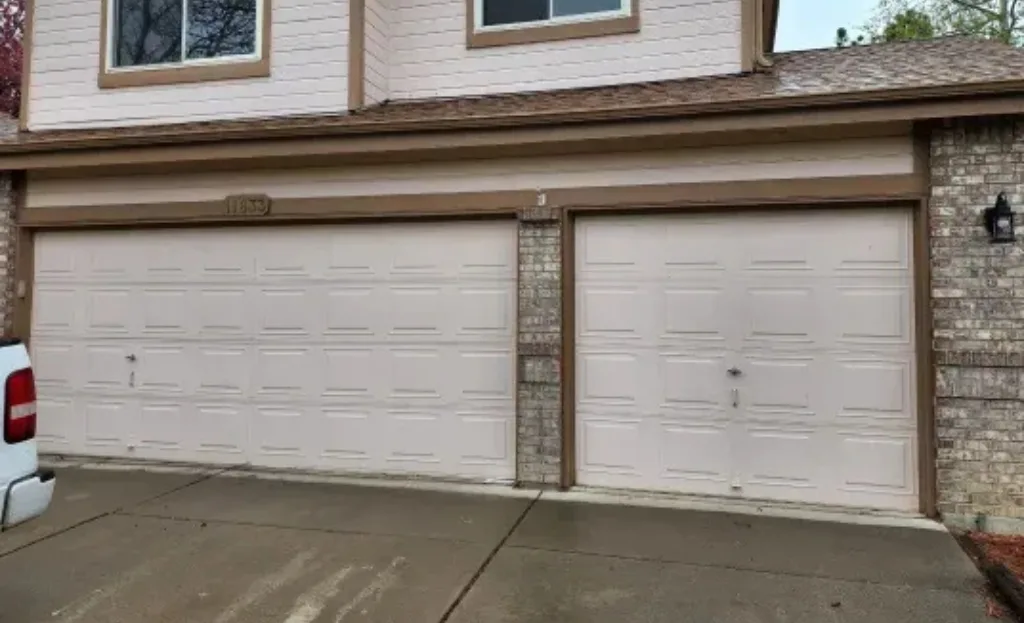
Garage Door Styles in Denver: 7 Options for Curb Appeal
Denver homes span colonial and craftsman bungalows in the older neighborhoods, ranch-style homes across the suburbs, contemporary new construction in the new developments, and farmhouse and Tudor styles throughout established areas. The right garage door style depends on your home's architecture first, and on Colorado's specific climate demands second. The comparison table below shows the seven styles we install most often in the Denver metro, with notes on what works where.
Why does architecture matching matter so much for Denver homes?
A garage door can account for 30 to 40 percent of a home's visible street-facing facade. Get the style right and the door reads as part of the house. Get it wrong and it pulls attention the wrong way, regardless of how well it's built. Denver neighborhoods also have distinct architectural identities, and a door that fits the neighborhood adds value while one that fights it can make an otherwise attractive home look mismatched.
Beyond looks, Denver's climate creates real constraints. With more than 300 sunny days per year, intense UV at altitude, periodic hailstorms, and hard freeze-thaw cycles all winter, the material behind the style matters. The best-looking door is the one that still looks good five years from now. For the full buying framework, start with our complete garage door buyer's guide.
Which garage door styles are most popular with Denver homeowners?
The comparison table below covers all seven, but here's what we see most often on Front Range installations and why each works in the local context.
Traditional raised-panel is the most installed style in the Denver metro. It suits ranch homes, colonial revivals, and most suburban builds from the 1970s onward. The raised panel design adds depth and shadow lines across the door face without committing to a strong architectural statement, which makes it the safest choice when you're not sure what else fits. It's available in steel and composite, and it takes paint and custom finishes well.
Carriage-house doors are the second most popular style in Denver and the first choice for craftsman, farmhouse, Tudor, and older character homes. The decorative overlays, hardware accents, and crossbeam details give a door personality that plain raised-panel can't match. For Colorado, we recommend steel or composite carriage-house doors over real wood. The UV exposure on a south-facing facade fades wood finishes in two to three seasons if you don't stay on top of refinishing. Steel carriage-house doors give you 90 percent of the look with a fraction of the maintenance. For more on custom carriage options, see our guide to carriage-style garage doors.
Contemporary flush doors have a flat, uninterrupted face with no panel lines or overlays. They suit modern and new-construction homes where the architecture already speaks through clean geometry. Bold colors, matte black, and dark charcoal finishes trend in newer Denver subdivisions. These doors take insulation well and hold up strongly against UV because there are no shadow lines or texture traps for finish deterioration.
Full-view glass and aluminum doors pair large glass sections with a slim aluminum frame. They let in light, create a dramatic street-facing impression, and belong on contemporary or modern homes. Clear, frosted, and tinted glass options are available. In Denver, ask specifically about impact-rated glass if your neighborhood sees significant hail seasons. For all glass and window options across door styles, see our window options FAQ.
Wood and faux-wood doors earn a place on custom, Victorian, and high-end traditional homes where the look is worth the investment. Real wood requires refinishing every 3 to 5 years under Colorado UV, and any neglect leads to warping and cracking faster here than in wetter climates. Faux-wood (composite overlay on a steel or polyurethane core) gives you most of the visual effect with far less upkeep and is the better long-term value for most Denver homeowners who want that look.
Mediterranean and arched styles work on Spanish colonial, stucco, and adobe-influenced homes that appear throughout south and west Denver neighborhoods. These doors typically feature arched window cutouts, decorative iron hardware, and warm earth-tone finishes. Steel and fiberglass both handle the format well.
Insulated flush steel is worth calling out separately because it's the material-and-style combination we recommend most often when homeowners want something low-maintenance, energy-efficient, and hail-resistant. The flush surface is easy to repaint, holds finishes cleanly, and doesn't accumulate damage in the panel seams the way heavily textured surfaces can after repeated freeze-thaw cycles.
What climate factors should Denver homeowners factor into their style choice?
Three conditions shape the decision for most Front Range homes.
- UV intensity. Colorado's altitude puts your door closer to the sun. Darker colors and wood finishes fade faster here than at sea level. Powder-coated steel and UV-stabilized composite finishes hold color longer.
- Hail. Denver sits in hail alley. Insulated steel panels resist impact better than hollow single-layer panels because the foam core stiffens each section. If you're choosing a glass door, ask about impact-rated glass panels.
- Freeze-thaw cycling. Any material joint that lets in water and then freezes can crack over time. Steel and composite handle this better than raw wood, which absorbs moisture at any unprotected joint.
How do you narrow down the style options for your specific Denver home?
Start with your home's existing architectural language and match the door's complexity to it. Then check your sun exposure: south and west-facing doors get the hardest UV load and should use the most UV-stable finish options. Finally, check your budget against the cost chart below and confirm whether insulation is part of the build (for any attached garage, it should be).
For Lakewood-specific style trends, see our guide to garage door styles in Lakewood. And for a full material and insulation comparison, see our material selection guide. Ready to see options in person? Get a free estimate and we'll bring samples to your home.
Popular Denver garage door styles compared
How the seven most common styles match to Denver's architectural landscape, with typical material choices, cost ranges, and Colorado-specific notes.
| Style | Best Denver home type | Typical material | 2-car installed cost | Colorado notes |
|---|---|---|---|---|
| Traditional raised-panel | Ranch, colonial, suburban | Steel or composite | $800 to $3,000 | Most common choice; holds up well in all conditions |
| Carriage-house | Craftsman, farmhouse, Tudor | Steel, composite, or wood | $1,500 to $5,000 | High curb appeal; avoid raw wood in full sun |
| Contemporary flush | Modern, new construction | Steel or aluminum | $1,200 to $4,000 | Clean lines; bold colors trend in newer subdivisions |
| Full-view glass + aluminum | Contemporary, modern | Aluminum with glass | $2,000 to $6,000 | Striking look; verify hail-resistant glass option |
| Wood and faux-wood | Traditional, Victorian, custom | Wood or composite | $2,000 to $6,000+ | Real wood needs refinishing every 3-5 years in Colorado sun |
| Mediterranean / arched | Spanish colonial, stucco | Steel or fiberglass | $1,800 to $5,000 | Arched windows, iron accents; suits south-facing elevations |
| Insulated flush steel | All home types | Steel | $1,200 to $3,500 | Best material for energy efficiency and hail resistance |
Installed cost ranges are for a standard 16 x 7 ft double door with basic hardware. Custom sizes and finishes add to the total.
Typical installed cost by style (Denver metro, 2-car door)
- Traditional raised-panel
- $800 to $3,000
- Contemporary flush steel
- $1,200 to $3,500
- Contemporary flush
- $1,200 to $4,000
- Carriage-house
- $1,500 to $5,000
- Full-view glass
- $2,000 to $6,000
Denver gets more than 300 sunny days per year, making UV resistance and finish durability critical factors when choosing a garage door material and style for Front Range homes.
Source: National Weather Service, Denver/Boulder forecast office
Sources and references
- 1.Denver climate data and sunny days per year — National Weather Service, Denver/Boulder
- 2.Garage door replacement return on investment — Remodeling Cost vs. Value Report
- 3.Residential garage door standards and safety — Door and Access Systems Manufacturers Association (DASMA)
Part of this guide
Complete GuideThe Ultimate Guide to Choosing the Right Garage Door for Your Home- What Are the Top Garage Door Styles for Modern Homes?The right garage door style matches your home's architecture first, then your budget. Traditional raised-panel doors suit most homes. Carriage-house and contemporary styles add character. Here is how to choose between them.Read guide
- Garage Door Styles in Lakewood: Top 5 Curb Appeal IdeasLakewood homes range from mid-century ranch to newer craftsman and contemporary builds, with Colorado's UV and freeze-thaw cycles as a constant. Here are the five styles we install most often in Lakewood, matched to local neighborhoods.Read guide
- How to Improve Your Home's Curb Appeal with a New Garage DoorA garage door covers 30 to 40 percent of most homes' street-facing front. Replacing an outdated or damaged door is the fastest way to lift your home's curb appeal and one of the highest-return improvements you can make before a sale.Read guide
Technical resources
Related services
G Brothers provides these services across the Denver metro, from Lakewood and Arvada to Centennial and Thornton.
Frequently asked questions
What's the best garage door for Colorado weather?
The best garage door for Colorado weather is an insulated steel door with a quality finish. Here is how it holds up to cold, sun, and hail.
Read full answerCan I get a custom or carriage-style garage door?
Yes, we install custom and carriage-style garage doors in steel, wood, and composite. See how carriage doors work and pick the right material.
Read full answerIs garage door insulation worth it?
Is garage door insulation worth it? In Colorado's cold winters an insulated door cuts heat loss, noise, and drafts on an attached garage.
Read full answerWhat garage door R-value do I need in Colorado?
What garage door R-value do you need in Colorado? Aim for R-12 to R-18 on an attached or heated garage, and learn why the seal matters too.
Read full answerDoes a new garage door increase home value?
Does a new garage door increase home value? Yes, near 190% at resale in Cost vs. Value reports, and it lifts curb appeal. Here's why it pays.
Read full answerHail and sun damage to a garage door in Colorado
Garage door hail damage and sun damage in Colorado: what is cosmetic, what is structural, and when to repair one panel versus replace the whole door.
Read full answerHave a garage door problem now?
Tell us what your door is doing and we will tell you what is likely wrong and what it costs. Same-day service across the Denver metro.