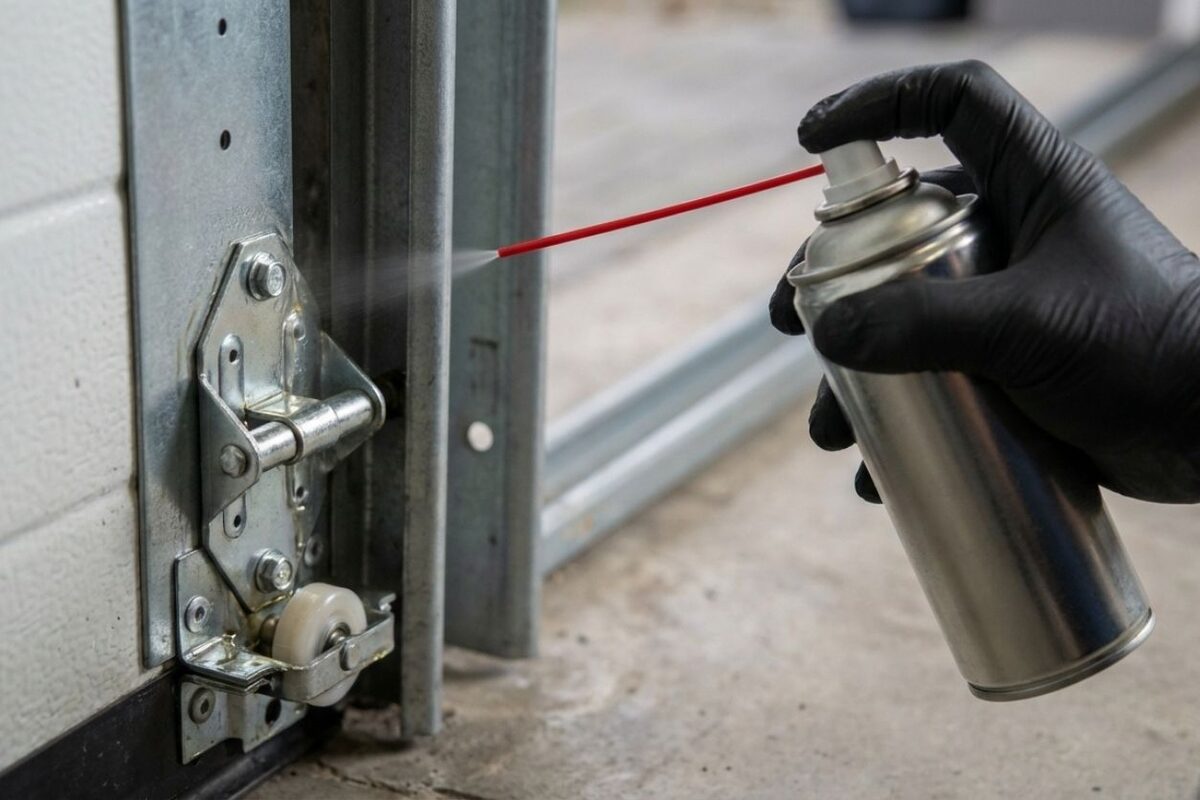
How to Lubricate a Garage Door the Right Way
To lubricate a garage door the right way, spray a silicone or white lithium product on the hinges, rollers, springs, and bearing plates every six months, and wipe the tracks clean instead of greasing them. The whole job takes about fifteen minutes and is one of the easiest ways to keep a door quiet and extend its life. The one rule most homeowners get wrong: do not use WD-40 as your lubricant, because it is a cleaner, not a lubricant.
A garage door that squeaks, grinds, or drags is usually just dry. Fresh lubricant cuts the noise, eases the strain on the opener, and keeps the rollers and springs from wearing out early. Here is exactly what to use, what to skip, and how to do it.
What do you need to lubricate a garage door?
You only need a few things:
- A garage door lubricant. A silicone-based spray or white lithium grease. Both cling to the parts and stay flowing in the cold.
- A clean rag to wipe away dirt and excess.
- A step ladder to reach the top rollers and the opener rail.
Lubrication is one step in keeping a door healthy. Our main garage door maintenance guide covers the rest of the routine.
Why should you avoid WD-40 on a garage door?
WD-40 is a degreaser and rust remover, not a lubricant. Sprayed on the moving parts, it strips away the grease that is already there and leaves the door dry within days, so it ends up noisier than before. Use it only to clean a rusty part or free a stuck hinge, then follow with a real silicone or lithium lubricant. There is a WD-40 silicone product made for this, so read the can and pick the lubricant, not the original.
How do you lubricate a garage door step by step?
Work top to bottom so you do not drip on parts you already cleaned:
- Close the door and cut the power. Unplug the opener so it cannot start while you work.
- Wipe the tracks. Clean out dirt and grime with a rag. Do not lubricate the tracks. The rollers need a clean, dry surface to grip.
- Spray the hinges. Hit each hinge and pivot point where the metal moves.
- Do the rollers. Apply a light spray to the bearings of metal rollers. If your rollers are nylon with sealed bearings, only lube the metal stems, not the wheel.
- Coat the springs. Lightly spray the springs above the door so they flex quietly.
- Hit the bearing plates. Lube the bearings on each end of the spring bar and any center bracket.
- Do the lock and the opener rail. A little on the lock keeps it smooth. Use white lithium grease on a chain or screw-drive rail.
- Wipe the excess and restore power. Run the door a few times to spread the lubricant.
How often should you lubricate a garage door in Colorado?
Every six months is the rule for most homes, and Colorado's climate is a good reason to stick to it. Cold thickens heavy grease and oil, which makes a door drag in winter, so a silicone-based lubricant that stays flowing is the better choice here. A good rhythm is once in the fall before the cold and once in the spring. Our guide on how weather affects your garage door explains why the local seasons matter.
What if the door is still noisy after lubrication?
If the grinding or squeaking continues after a fresh coat, lubrication was not the whole problem:
- Worn rollers grind even when oiled and need replacing. See our guide to overhead garage door repair.
- Loose hardware rattles. Tighten the hinges, brackets, and bolts.
- A spring or cable problem can sound like noise but is a safety issue. Those are under high tension, so call a technician.
When should you call a professional?
Lubrication and cleaning are safe to do yourself. Call a pro if the door is still loud after service, the rollers are cracked or worn, or you notice anything wrong with the springs or cables. Those repairs are under high tension and are not DIY work.
We provide garage door repair and maintenance across Denver and the surrounding suburbs. If your door needs more than a fresh coat, get a free estimate and we will make it run smooth and quiet again.
Garage door lubricant: what to use where
Which lubricant works on each part of the door, plus the common mistakes that make a door noisier instead of quieter.
| Part | Use | Avoid |
|---|---|---|
| Hinges and pivot points | Silicone or white lithium spray | WD-40 as a lubricant |
| Rollers (metal, with bearings) | Light spray on the bearings | Soaking nylon rollers |
| Springs | Silicone spray, light coat | Heavy grease in cold |
| Bearing plates and bushings | Silicone or lithium | Skipping them |
| Tracks | Wipe clean only | Greasing the track |
| Opener chain or screw rail | White lithium grease | Oil that drips |
Wipe away excess after each application. Extra lubricant attracts grit that grinds the parts.
Why lubrication pays off
- Recommended frequency
- 2x per year
- Time to do the job
- ~15 min
- Roller replacement avoided
- $150 to $250
- Spring replacement avoided
- $200 to $450
Most garage door manufacturers recommend lubricating the moving parts about every six months. Twice-a-year service keeps the door quiet and reduces wear on the opener.
Source: Door & Access Systems Manufacturers Association (DASMA)
Sources and references
- 1.Garage door maintenance and safety standards — Door & Access Systems Manufacturers Association (DASMA)
- 2.Automatic garage door opener safety and auto-reverse — U.S. Consumer Product Safety Commission
Part of this guide
Complete GuideGarage Door Maintenance Tips to Extend the Life of Your DoorTechnical resources
Related services
G Brothers provides these services across the Denver metro, from Lakewood and Arvada to Centennial and Thornton.
Service areas
Local service for this guide
Explore the nearby service page most relevant to this topic.
Frequently asked questions
How often should I lubricate my garage door?
How often to lubricate a garage door: twice a year for most homes, more in dry Colorado air. Learn which parts to grease and which lubricant to use.
Read full answerHow do I stop my garage door from squeaking?
To stop a garage door squeaking, lubricate the hinges, rollers, springs, and bearings with the right product. Here's the fix and why WD-40 makes it worse.
Read full answerWhy is my garage door so loud?
Why is my garage door so loud? Grinding, squeaking, rattling, or a loud bang each point to a different part. Here is what each sound means.
Read full answerWhat does a grinding garage door noise mean?
A grinding garage door noise usually means worn rollers, dry bearings, or a stripped opener gear. Here's what each grinding sound means and how to fix it.
Read full answerWhen do garage door rollers need replacement?
Garage door rollers need replacement about every 7 years or 10,000 cycles. Learn the warning signs, nylon vs steel options, and why worn rollers fail.
Read full answerWhat's on a garage door maintenance checklist?
What's on a garage door maintenance checklist? Lubricate parts, test the balance and auto-reverse, tighten hardware, and check rollers, cables, and seals.
Read full answerHave a garage door problem now?
Tell us what your door is doing and we will tell you what is likely wrong and what it costs. Same-day service across the Denver metro.