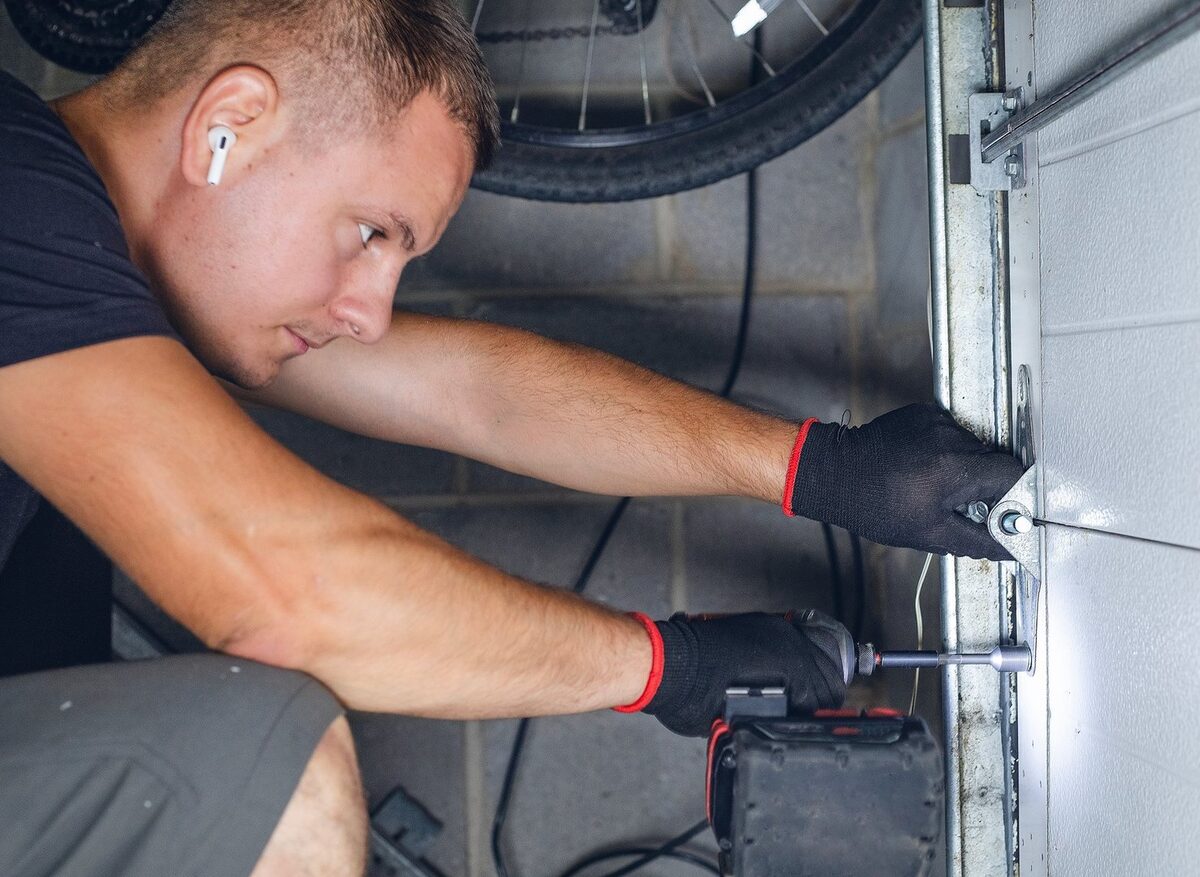
How to Repair a Garage Door?
To repair a garage door, first watch how it moves so you can find the fault, then fix the part that is failing. You can safely clean and align tracks, tighten loose hardware, replace worn rollers, lubricate moving parts, and reset a tripped opener yourself. Spring and cable work is the exception. Those parts are under extreme tension and should be left to a technician.
A door that sticks, grinds, or refuses to open disrupts your whole day. Most problems trace back to a handful of parts, and many of them are an easy do-it-yourself fix once you know what you are looking at. Here is how to work through it step by step, and how to tell when a job is past the safe DIY line.
What are the most common garage door problems?
Most repair calls come down to a few worn or misaligned parts. Knowing the usual suspects helps you find the real issue before you start:
- Broken springs. Springs counterbalance the door's weight. A broken one leaves the door stuck, often part way, and you may hear a loud bang when it snaps.
- Misaligned tracks. Bent or dirty tracks make the door jerk, bind, or stop part way.
- Worn rollers or hinges. These wear with use and cause loud, jerky movement.
- A faulty opener. An electrical fault, a stripped gear, or a disconnected trolley stops the opener from moving the door.
For a wider symptom-by-symptom rundown, see our guide to troubleshooting common garage door problems.
How do you diagnose what is wrong with the door?
Start by opening and closing the door while you watch and listen. The way it moves points straight to the failing part:
- Uneven movement usually means a spring problem, either broken, out of balance, or worn.
- No movement at all points to the opener, the power supply, or a broken spring.
- Grinding or rattling points to worn rollers, dry hinges, or loose hardware.
A careful look from top to bottom tells you which repair to plan for. Check the tracks, rollers, hinges, springs, and cables for visible wear, then match what you see to the table of common problems below.
How do you fix garage door springs safely?
Here is the honest answer: spring repair is the one job we tell homeowners not to DIY. Springs hold enough stored energy to break a hand or worse, and they are the leading cause of garage door injuries. A door that will not lift, sags in the middle, or dropped fast after a loud bang almost always has a broken spring.
Residential doors use two spring types. Torsion springs mount on a bar above the door and handle the most tension. Extension springs run along the tracks on each side. Both store serious force. If you suspect a broken spring, leave the door closed and call a pro. Read more in our guide to repairing broken garage door springs, then book a tech for the actual swap.
How do you realign tracks and replace rollers?
Bent, dirty, or misaligned tracks are a common cause of a door that sticks or moves unevenly, and this is a safe repair to do yourself:
- Clean the tracks. Wipe out built-up dirt and debris with a damp cloth so the rollers run free.
- Check alignment. The tracks should sit parallel and plumb. Gently tap a bent section back with a rubber mallet, and tighten any loose mounting brackets.
- Inspect the rollers. Replace any that are cracked, chipped, or rusted. Swap one at a time so the door stays supported, and match the new roller size to the old one.
Worn hinges cause the same jerky motion and can pull the door out of alignment. Replace any that are cracked or bent before they damage the panels. If a track is badly bent or the door has come off its tracks entirely, that is an overhead door repair for a technician.
Why is my garage door so loud, and how do I fix it?
A noisy door is almost always dry or loose parts, and both are quick fixes. Lubrication is the single most effective thing you can do for smooth, quiet operation:
- Apply a silicone-based lubricant to the rollers, hinges, springs, and tracks every 6 to 12 months.
- Avoid oil-based products like WD-40. They attract dust and grit, which wears parts faster.
- Tighten loose bolts and screws on the brackets, hinges, and tracks with a wrench or screwdriver, but do not overtighten.
Our step-by-step guide on how to lubricate a garage door covers which parts to hit and which to skip. Regular lubrication is also one of the cheapest ways to put off bigger repairs.
How do you test the door's balance?
An unbalanced door makes the opener and springs work harder, which shortens the life of both. Test it twice a year:
- Pull the emergency release cord to disconnect the opener.
- Lift the door by hand to about waist height and let go.
A balanced door holds in place. If it slides down or springs up, the spring tension is off. That adjustment is a spring job, so call a technician rather than fiddling with the springs yourself.
When should you repair the opener versus replace it?
If the opener runs but the door does not move, check the simple things first. Make sure the trolley is reconnected after a manual release, the wall and remote batteries are good, and the safety sensors are aligned and clear. A reset often clears a glitch.
When the motor is stripped, the gears are worn, or the unit is more than 10 to 15 years old, replacement usually makes more sense than another repair. Our guide on how to install a garage door opener walks through choosing a chain, belt, or screw drive and mounting it correctly.
When should you call a professional?
Cleaning tracks, swapping rollers, tightening hardware, and lubricating parts are all safe to handle yourself. Call a pro the moment springs, cables, or a door that is off its tracks are involved, or when a repair does not hold. Those are the jobs where a mistake gets expensive or dangerous fast.
We handle the full range of garage door repair across the metro, from springs and cables to openers and panels. If you would rather skip the diagnosis, get a free estimate or call us at (720) 421-6489 and we will get your door running right. Check that we cover your area in the Denver metro and we will come to you.
Common garage door problems and how to fix them
What the most common symptoms usually mean, and whether the fix is a safe do-it-yourself job or a repair best left to a technician.
| Symptom | Likely cause | DIY or pro |
|---|---|---|
| Door will not open and you heard a bang | Broken torsion or extension spring | Pro |
| Door is jerky or stuck part way | Dirty or bent tracks, worn rollers | DIY |
| Loud grinding or rattling | Loose hardware, dry rollers and hinges | DIY |
| Door reverses or will not close | Misaligned or blocked safety sensors | DIY |
| Opener runs but door does not move | Stripped gear or disconnected trolley | Pro |
| Frayed or hanging cable | Worn or snapped lift cable | Pro |
When a spring or cable is involved, call a technician. Those parts are under extreme tension.
Typical garage door repair cost by job (Denver metro)
- Track realignment
- $125 to $200
- Roller replacement
- $150 to $250
- Opener repair
- $150 to $350
- Cable replacement
- $150 to $300
- Spring replacement
- $200 to $450
A standard garage door spring is rated for about 10,000 open-close cycles, roughly 7 years of everyday use, before it wears out and needs replacement.
Source: Door & Access Systems Manufacturers Association (DASMA)
Sources and references
- 1.Garage door safety and counterbalance system standards — Door & Access Systems Manufacturers Association (DASMA)
- 2.Automatic garage door opener safety and auto-reverse — U.S. Consumer Product Safety Commission
Explore this guide
- How to Troubleshoot Common Garage Door ProblemsStart with the simple checks: power, batteries, and the safety sensors. Most common garage door problems trace to a handful of parts, and many are a safe DIY fix once you know what you are looking at.Read guide
- Overhead Garage Door Repair: Common Issues With Tracks, Rollers, and SpringsMost overhead garage door repair comes down to three parts: the tracks, the rollers, and the springs. Track and roller work is a safe DIY fix. Leave spring repair to a pro because of the high tension involved.Read guide
- Garage Door Service in Denver: What to Expect and What It CostsGarage door service in Denver covers three things: emergency repair, routine tune-ups, and full replacement. Most repair visits run $150 to $350, and a same-day local pro can usually have a stuck door working again the same afternoon.Read guide
Technical resources
Related services
G Brothers provides these services across the Denver metro, from Lakewood and Arvada to Centennial and Thornton.
Frequently asked questions
What are the signs my garage door needs repair?
The signs a garage door needs repair: new noises, a sagging door, slow or jerky movement, and a door that will not stay put halfway up.
Read full answerHow do I know if my garage door spring is broken?
Is your garage door spring broken? Look for a loud bang, a 2 to 4 inch gap in the spring, or a door that won't lift. Here are the signs to check.
Read full answerWhy is my garage door opener not working?
Garage door opener not working? Check the power, remote battery, sensors, and travel limits first. Here is what is DIY-safe and what needs a tech.
Read full answerWhy is my garage door off track?
A garage door goes off track from a broken cable, worn rollers, an obstruction, or a car bump. Here are the causes, the risks, and repair costs.
Read full answerShould I repair or replace my garage door?
Should you repair or replace your garage door? It comes down to age, damage, safety, and cost. Here is the line between a smart fix and a new door.
Read full answerHow much does garage door repair cost?
How much does garage door repair cost? Most Front Range repairs run $150 to $600. See typical prices by job and what moves the number up or down.
Read full answerHave a garage door problem now?
Tell us what your door is doing and we will tell you what is likely wrong and what it costs. Same-day service across the Denver metro.