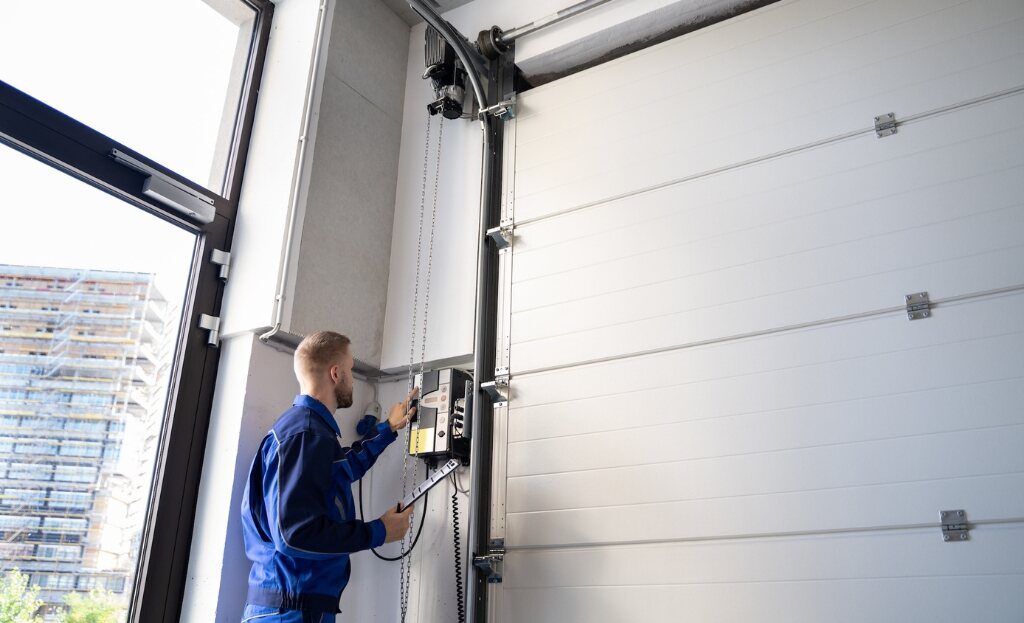
How to Troubleshoot Common Garage Door Problems
To troubleshoot common garage door problems, start with the simple checks before you assume the worst: confirm the opener has power, replace the remote batteries, and make sure the safety sensors near the floor are clean and lined up. Most issues trace back to a handful of parts, and many are a safe do-it-yourself fix. The exceptions are the springs and cables, which are under high tension and belong to a technician.
A door that sticks, makes noise, or refuses to close throws off your whole day. The good news is that the symptom usually points straight to the cause. Here is how to work through the most common garage door problems, room by room, and when to stop and call for help.
Why won't my garage door open or close?
A door that will not move at all is usually a power or sensor issue, not a dead motor. Run these checks in order:
- Check the power. Make sure the opener is plugged in and the outlet works. If it is dead, look for a tripped breaker and reset it.
- Check the remote and wall button. If the wall button works but the remote does not, it is a remote problem, not the opener.
- Check the safety sensors. If the door will not close and the opener lights blink, the photo-eye sensors near the floor are blocked or out of line. Wipe the lenses and adjust them until both indicator lights stay solid.
If the door still will not budge and you hear nothing from the opener, or you heard a bang earlier, you may have a broken spring. That is a pro repair covered in our how to repair a garage door guide.
Why is my garage door so noisy?
A loud door is almost always dry or loose parts, and both are quick fixes:
- Tighten the hardware. Constant use loosens bolts, screws, and brackets. Snug up the hinges, track brackets, and roller brackets, but do not overtighten.
- Lubricate the moving parts. Apply a silicone-based lubricant to the rollers, hinges, springs, and tracks. Skip heavy grease and oil, which attract grit.
- Inspect the rollers. Cracked or flat-spotted rollers grind along the track. Nylon rollers run quieter and last longer than metal.
Our step-by-step guide on how to lubricate a garage door covers which parts to hit and which to skip.
Why does my garage door open or close unevenly?
Uneven, jerky, or one-sided movement points to the parts that carry the door's weight:
- Tracks. Debris or a bent rail keeps the door from running square. Clean the channel and check that both tracks are plumb.
- Springs and cables. If one spring or cable is worn, the door pulls to one side or hangs crooked. Because they are under high tension, leave inspection and repair to a technician.
A door that drags badly or has slipped sideways can come off its tracks, which is an overhead garage door repair for a pro.
Why does my garage door reverse before it closes?
If the door starts down then rolls back up, the safety system is doing its job, usually for one of three reasons:
- The sensors are dirty or out of line. Clean the lenses and align them until the lights are solid.
- Something is in the path. Even a broom handle or a stray tool can trip the auto-reverse. Clear the opening.
- The travel limits are off. If the opener thinks the door hit the floor early, small limit adjustments on the motor unit fix it. Check your opener manual for the dials.
Why won't my garage door remote work?
A dead remote is one of the most common garage door problems and one of the easiest:
- Replace the battery first. It solves most remote failures.
- Reprogram it. If a fresh battery does not help, the remote may have lost its link. Follow the pairing steps for your opener, usually a learn button on the motor unit.
- Rule out interference. LED bulbs and nearby electronics can shorten remote range. Try a different bulb in the opener if range suddenly dropped.
When should you call a professional?
Power checks, sensor cleaning, hardware tightening, lubrication, and remote programming are all safe to handle yourself. Call a pro when the springs or cables are worn, the door is off its tracks, the opener motor runs but the door does not move, or a fix does not hold. Those are the jobs where a mistake gets expensive or dangerous fast.
We handle the full range of garage door repair across the metro, and we serve homeowners throughout Denver, Lakewood, Arvada, and the surrounding suburbs. If you would rather skip the diagnosis, get a free estimate and we will sort it out for you.
Common garage door symptoms and the usual cause
What the most common garage door problems usually mean, and whether the fix is a safe do-it-yourself job or one best left to a technician.
| Symptom | Likely cause | DIY or pro |
|---|---|---|
| Door won't open at all | No power, tripped breaker, or broken spring | DIY first, then pro |
| Door won't close, lights blink | Blocked or misaligned safety sensors | DIY |
| Loud grinding or rattling | Loose hardware, dry rollers | DIY |
| Door opens or closes unevenly | Worn spring, cable, or bent track | Pro |
| Door reverses before it closes | Dirty sensors or limit settings | DIY |
| Remote does nothing | Dead battery or lost programming | DIY |
Spring, cable, and motor faults are pro jobs. The rest are safe to try yourself first.
Where common garage door problems start
- Sensor alignment or blockage
- ~30% of no-close calls
- Loose hardware or dry rollers
- ~25% of noise calls
- Remote battery or programming
- ~20% of remote calls
- Spring or cable wear
- ~25% of stuck-door calls
Federal safety rules have required photo-eye sensors and auto-reverse on residential garage door openers since 1993, which is why a blocked or misaligned sensor is the top reason a door refuses to close.
Source: U.S. Consumer Product Safety Commission
Sources and references
- 1.Automatic garage door opener safety and auto-reverse requirements — U.S. Consumer Product Safety Commission
- 2.Garage door counterbalance and safety standards — Door & Access Systems Manufacturers Association (DASMA)
Part of this guide
Complete GuideHow to Repair a Garage Door?Technical resources
Related services
G Brothers provides these services across the Denver metro, from Lakewood and Arvada to Centennial and Thornton.
Service areas
Local service for this guide
Explore the nearby service page most relevant to this topic.
Frequently asked questions
Why won't my garage door open?
Garage door won't open? Start with power, the remote battery, the lock, and the sensors. Here is what you can safely check and what needs a pro.
Read full answerGarage door won't close all the way? Common causes
Garage door won't close all the way? Usually it's the safety sensors, the opener's close-limit setting, or a track obstruction. Here are the fixes.
Read full answerWhy is my garage door opener not working?
Garage door opener not working? Check the power, remote battery, sensors, and travel limits first. Here is what is DIY-safe and what needs a tech.
Read full answerHow do I fix garage door sensors that won't align?
Fix garage door sensor alignment yourself: read the LED colors, clean the lenses, level the brackets, and check the wiring so your door stops reversing.
Read full answerWhy won't my garage door remote work?
Why your garage door remote stopped working: a dead battery, lost programming, range or antenna trouble, or LED-bulb interference, and how to fix it.
Read full answerWhy is my garage door so loud?
Why is my garage door so loud? Grinding, squeaking, rattling, or a loud bang each point to a different part. Here is what each sound means.
Read full answerHave a garage door problem now?
Tell us what your door is doing and we will tell you what is likely wrong and what it costs. Same-day service across the Denver metro.