How Weather Affects Your Garage Door and What You Can Do About It
Weather wears a garage door in three ways: temperature swings warp the panels and stress the springs, moisture causes rust and freezing, and high wind strains the largest moving part of your home. In Colorado, where the temperature can swing forty degrees in a day and the sun is intense at altitude, these effects add up fast. The good news is that insulation, a tight seal, and a simple maintenance routine protect the door from most of it.
Your garage door faces the elements every day, and it is the biggest exterior surface on most homes. Understanding how each kind of weather attacks it lets you get ahead of the damage instead of paying for an emergency repair in January. Here is what each condition does and how to protect against it.
How do temperature extremes affect a garage door?
Heat and cold both move the metal in a door, and that movement causes wear:
- Summer heat expands steel and aluminum panels, which can warp or bind the door. High heat also breaks down the lubricant on the moving parts, leaving them stiff or squeaky.
- Winter cold makes metal springs, hinges, and tracks brittle and more likely to snap. Cold also thickens grease and oil, so the door drags and the opener strains.
The fix is to use a silicone-based lubricant that stays flowing in the cold and to insulate the garage so the door is not exposed to the full swing. Our guide on how to lubricate a garage door covers the right product.
How does moisture and humidity damage a door?
Water is the quiet enemy of a garage door:
- Steel doors rust where the finish is chipped or scratched, which weakens the metal over time.
- Wood doors absorb moisture and swell, warp, or rot if they are not sealed and repainted.
- Springs and cables corrode, especially when road salt is tracked into the garage in winter.
Keep steel doors painted and rustproofed, reseal wood doors before they crack, and rinse road salt off the bottom of the door in winter.
What happens when snow and ice build up?
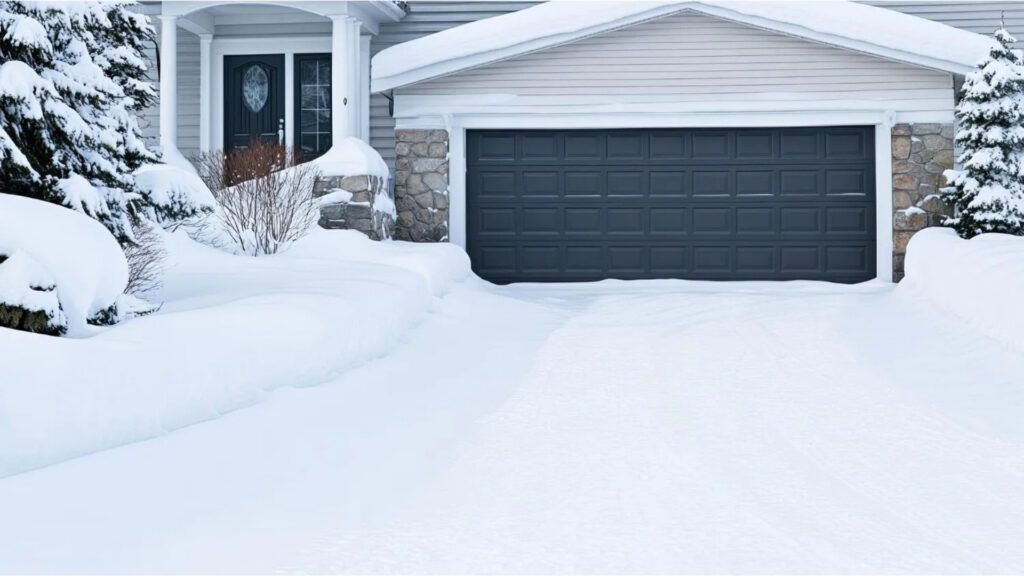
The most common winter problem in Colorado is a door frozen to the floor. When snowmelt pools at the base and refreezes, it bonds the bottom seal to the concrete. Forcing the door open then can tear the seal, strain the opener, or bend a panel. To prevent it:
- Keep the area at the base of the door clear of snow and ice.
- Replace a cracked or hardened bottom seal before winter.
- If the door is stuck, free the ice rather than forcing the opener.
How does wind affect a garage door?
The garage door is often the largest single surface on a home, so strong wind puts real pressure on it. High gusts can flex the panels, and a door that is not reinforced can blow off its tracks. Once that happens, wind enters the garage and pushes up against the roof from inside. In wind-prone areas, reinforcing the door or choosing a wind-rated model adds a margin of safety, and keeping the tracks and hinges tight helps the door hold up.
How does insulation protect against weather?
An insulated door is the single best defense against Colorado weather. It buffers the panels from the full temperature swing, which reduces warping and eases the strain on the springs and opener. It also blocks the heat and cold from reaching the rooms next to an attached garage, which lowers your energy bills. Our pillar guide on insulated garage doors in Denver and our guide to energy-efficient garage doors go deeper on R-value and construction.
What maintenance protects a door year-round?
A short routine, done twice a year, catches most weather damage:
- Tighten the hardware that temperature swings loosen.
- Lubricate the rollers, hinges, and springs with a silicone product.
- Inspect the bottom seal and weatherstripping for cracks.
- Test the balance and the auto-reverse.
Our garage door maintenance guide has the full checklist.
When should you call a professional?
Sealing, lubricating, and clearing ice are safe to do yourself. Call a pro when a spring or cable has corroded or snapped, the door has blown off its track, a panel is warped, or the door is frozen down and will not free up. Those repairs involve high tension or structural damage.
We handle weather-related garage door repair across Denver, Lakewood, Golden, and the surrounding suburbs, in every season. Get a free estimate and we will get your door back to working order.
How weather affects a garage door
The main weather conditions a Colorado garage door faces, what each one does to the door, and the practical fix.
| Condition | Effect on the door | What to do |
|---|---|---|
| Summer heat | Metal expands, panels warp, lubricant breaks down | Lubricate, insulate, check balance |
| Winter cold | Springs go brittle, grease thickens, door drags | Use silicone lube, insulate |
| Moisture and humidity | Rust on steel, swelling on wood | Seal, paint, rustproof |
| Snow and ice | Door freezes to the floor, seal cracks | Clear the base, replace the seal |
| High wind | Door flexes, can blow off track | Reinforce, consider a wind-rated door |
An insulated door with a tight seal handles all of these better than a thin single-layer panel.
Weather stress on a Colorado garage door
- Freeze-thaw days per year (Denver)
- 300+ days
- Recommended checks per year
- 2 (fall and spring)
- Recommended R-value
- R-13 or higher
- Bottom seal lifespan
- ~3 to 5 years
Denver sees more than 300 freeze-thaw days and intense high-altitude sun each year, a combination that fatigues garage door springs and seals faster than milder climates.
Source: National Weather Service, Denver/Boulder
Sources and references
- 1.Denver climate normals and freeze-thaw data — National Weather Service, Denver/Boulder
- 2.Garage door counterbalance and safety standards — Door & Access Systems Manufacturers Association (DASMA)
Part of this guide
Complete GuideInsulated Garage Doors in DenverTechnical resources
Related services
G Brothers provides these services across the Denver metro, from Lakewood and Arvada to Centennial and Thornton.
Service areas
Local service for this guide
Explore the nearby service page most relevant to this topic.
Frequently asked questions
Why won't my garage door work in cold weather?
Why your garage door won't work in cold weather: stiff grease, contracted metal, a touchy opener, ice at the base, or a brittle spring. Denver fixes.
Read full answerGarage door frozen to the ground? How to free it
Garage door frozen to the ground? Don't force the opener. Here is how to safely free a door frozen to the slab and keep it from freezing again this winter.
Read full answerHail and sun damage to a garage door in Colorado
Garage door hail damage and sun damage in Colorado: what is cosmetic, what is structural, and when to repair one panel versus replace the whole door.
Read full answerWhat's the best garage door for Colorado weather?
The best garage door for Colorado weather is an insulated steel door with a quality finish. Here is how it holds up to cold, sun, and hail.
Read full answerIs garage door insulation worth it?
Is garage door insulation worth it? In Colorado's cold winters an insulated door cuts heat loss, noise, and drafts on an attached garage.
Read full answerHow do I replace the garage door bottom seal?
How to replace a garage door bottom seal: identify the retainer, measure the door width, slide out the old seal, and feed in the new one. A doable DIY job.
Read full answerHave a garage door problem now?
Tell us what your door is doing and we will tell you what is likely wrong and what it costs. Same-day service across the Denver metro.