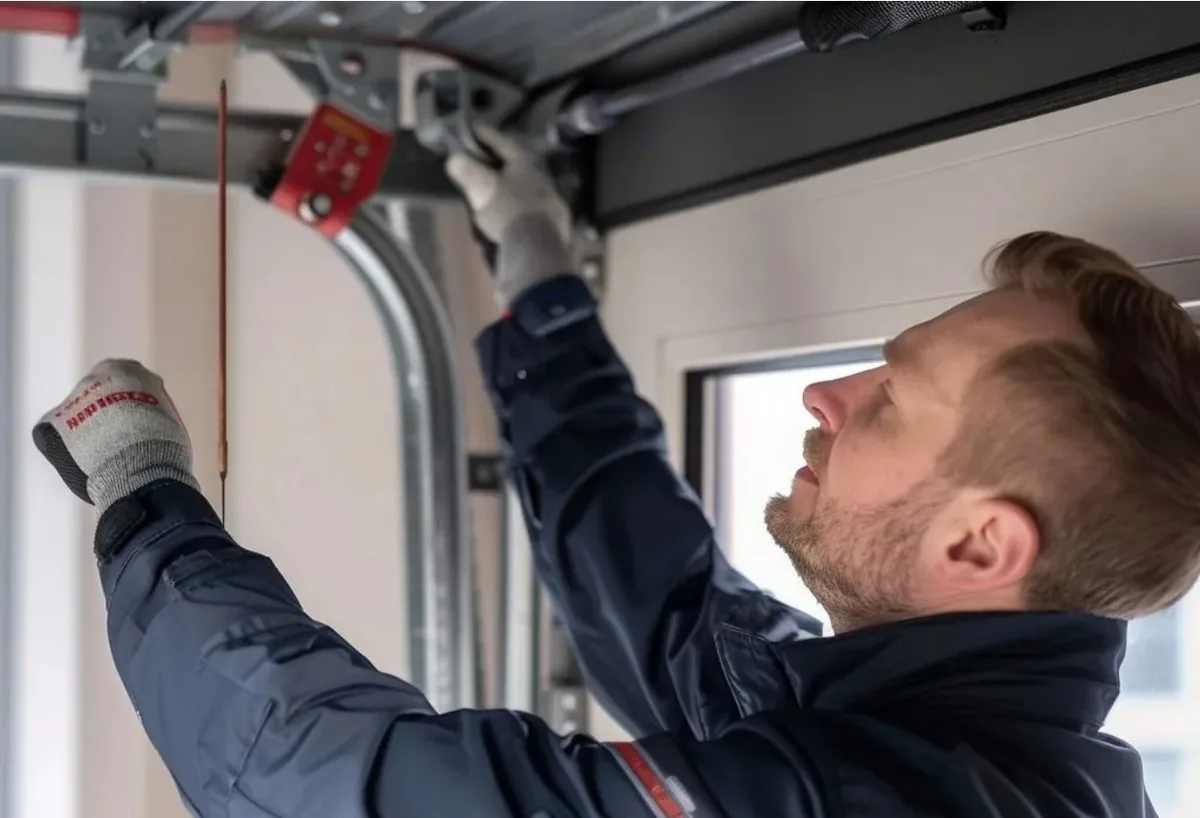
Garage Door Maintenance Checklist: A 15-Minute Monthly Routine
This 15-minute checklist, done once a month, catches the problems that cause most garage door failures: an out-of-balance door straining the opener, dry parts that grind and wear early, and safety sensors that have drifted out of alignment. Run through the four steps below in order and you will cover everything that matters for a door that runs quietly and safely year-round.
What should you look for in a monthly visual inspection?
Start with the door closed and work your way around the whole system. You are looking for early warning signs, not making repairs:
- Open the door with the opener and listen. A healthy door makes a steady, even sound. Grinding, screeching, or loud rattling points to dry parts or a worn component that needs attention.
- Check the panels for dents, cracks, or rust. On steel doors, a cracked finish down to bare metal will rust fast in Colorado's wet seasons if left untreated.
- Look over the hardware: hinges, rollers, tracks, and the springs above the door. Watch for visible rust, corrosion, gaps in a spring coil, or anything that looks bent or out of line.
- Make sure all bolts and mounting brackets look tight. Vibration from thousands of cycles works fasteners loose over time.
If you spot a frayed cable, a gap in a spring coil, or a cracked cable drum, stop and call a pro. Those parts are under high tension and are not safe to adjust yourself. Our guide on why regular inspections matter explains what each warning sign means in more detail. Budget about three minutes for the visual pass.
How do you test whether your garage door is balanced?
The springs do the heavy lifting, not the opener. An out-of-balance door makes the opener work far harder than it should, wearing both the opener and the springs faster. This two-minute test reveals the problem before it turns into a repair call:
- Close the door fully.
- Pull the red emergency release cord to disconnect the opener. You are now operating the door by hand.
- Lift the door by hand to about waist height, roughly three to four feet off the ground.
- Let go gently and step back.
A balanced door stays where you left it, or drifts only slightly. If it slides down on its own, the springs are under-tensioned. If it rises, they are over-tensioned. Either way, spring tension is a job for a technician. Do not attempt to adjust the springs yourself. Book a tune-up and mention that the door failed the balance test.
How do you test the auto-reverse and photo-eye safety features?
Two safety systems protect your household, and both need a quick check every month. Since 1993, federal rules have required residential openers to include these features. The CPSC credits them with a sharp reduction in entrapment injuries. Test them and never disable them:
Auto-reverse test: lay a block of wood or a rolled-up towel flat on the ground in the door's path and close the door with the remote. The door should reverse the moment it touches the object. If it does not reverse, or if it presses down and then reverses slowly, the force setting on the opener is off. Adjust the downward-force dial on the motor housing, then retest. If the problem continues, call a pro.
Photo-eye sensor test: with the door open, start it closing and wave a broom handle through the beam near the floor, roughly six inches up. The door should stop and reverse immediately. If it does not, wipe the sensor lenses clean with a dry cloth. Dust, cobwebs, and direct sunlight can block the beam. Check that both sensors face directly at each other and that the indicator lights are steady, not blinking. A blinking light means the beam is interrupted. If cleaning and realigning the sensors does not fix it, call a pro.
What lubricant should you use, and how do you tighten loose hardware?
Dry parts make noise, wear faster, and put extra load on the opener. Lubrication every 6 to 12 months keeps everything moving smoothly. The comparison table above shows which product to use on which part. Here is the order to work through:
- Wipe the inside of the tracks clean with a dry cloth. Tracks should be clean, not greased.
- Apply white lithium grease or a dedicated garage door oil to the roller stems, hinges, and the torsion spring coils along the top.
- Apply silicone spray to nylon rollers and to the weather stripping along the sides and top of the frame.
- Go around with a socket wrench and snug up any loose bolts on the track brackets, mounting hardware, and opener rail. Do not overtighten. You are snugging, not torquing.
For a more detailed walkthrough of lubrication, including which parts to skip, see our guide on how to lubricate a garage door.
What maintenance matters most in Colorado's climate?
Denver's freeze-thaw cycles, high-altitude UV, and dry air are harder on seals and finishes than a milder climate. A few seasonal tasks pay extra dividends here:
- Bottom seal: check it each season. If you can see daylight under the closed door, or the rubber has cracked and stiffened, replace the seal. A tight seal keeps out cold air, pests, and water.
- Exterior surface: wash steel doors with mild soap and water once or twice a year. Touch up any rust spots before they spread. Wood doors need resealing or repainting every two to three years to stand up to the dry air and UV exposure.
- Cold-weather check: after a hard overnight freeze, make sure the bottom seal has not bonded to the slab before running the opener. If it has, break the ice bond by hand before you run the motor.
For the full picture of what Colorado weather does to garage doors through the seasons, our complete maintenance guide covers every task and how often to do it.
What should you call a pro to handle?
Everything on this checklist is safe for a homeowner to do. The only exceptions are anything involving spring tension or cables. If the door fails the balance test, if a spring has a visible gap or looks stretched, or if a cable is fraying, stop and call a professional. We offer tune-up visits across the metro that handle the spring and cable work for you. To schedule service, get a free estimate or call us at (720) 421-6489. We cover homeowners throughout the Denver metro area, including Lakewood and the surrounding communities.
Which lubricant to use on each part
Using the wrong product on the wrong part is one of the most common maintenance mistakes. This table shows what to use and what to skip.
| Lubricant | Best application | Use it? |
|---|---|---|
| White lithium grease | Hinges, steel rollers, torsion spring coils | Yes, recommended |
| Silicone spray | Nylon rollers, weather stripping, track interiors | Yes, recommended |
| Garage door oil (aerosol) | Springs, roller stems, pivot points | Yes, recommended |
| WD-40 (standard) | Rust removal only, not lubrication | No, strips existing grease |
| Motor oil or heavy grease | None on garage door hardware | No, traps debris and gums up |
Less is more. A light, even coat protects parts. Heavy saturation drips onto vehicles and attracts abrasive grit, which wears parts faster.
Monthly checklist: time per step
- Visual and sound inspection
- 3 minutes
- Balance test
- 3 minutes
- Auto-reverse and sensor test
- 3 minutes
- Lubrication and hardware tightening
- 6 minutes
A standard residential torsion spring is rated for about 10,000 open-close cycles. Regular maintenance keeps the spring and the door reaching that rating instead of failing short of it.
Source: Door & Access Systems Manufacturers Association (DASMA)
Sources and references
- 1.Garage door counterbalance system standards — Door & Access Systems Manufacturers Association (DASMA)
- 2.Automatic garage door opener safety and auto-reverse requirements — U.S. Consumer Product Safety Commission (CPSC)
- 3.Weatherstripping and sealing air leaks — ENERGY STAR
Part of this guide
Complete GuideGarage Door Maintenance Tips to Extend the Life of Your Door- How to Lubricate a Garage Door the Right WayTo lubricate a garage door, use a silicone or lithium-based spray on the hinges, rollers, springs, and bearings every six months. Skip the tracks and never use WD-40 as a lubricant. The whole job takes about fifteen minutes.Read guide
- Why Regular Garage Door Inspections Are a Must for HomeownersRegular garage door inspections catch worn springs, frayed cables, and failing sensors before they leave you stranded or cause injury. A yearly check is the cheapest way to avoid an emergency repair.Read guide
- Garage Door Maintenance in Lakewood: A Seasonal ChecklistGarage door maintenance in Lakewood comes down to a short seasonal routine: tighten hardware, lubricate moving parts, test the balance and safety reverse, and check the seals. Twenty minutes twice a year heads off most winter failures.Read guide
Technical resources
Related services
G Brothers provides these services across the Denver metro, from Lakewood and Arvada to Centennial and Thornton.
Frequently asked questions
What's on a garage door maintenance checklist?
What's on a garage door maintenance checklist? Lubricate parts, test the balance and auto-reverse, tighten hardware, and check rollers, cables, and seals.
Read full answerHow often should I lubricate my garage door?
How often to lubricate a garage door: twice a year for most homes, more in dry Colorado air. Learn which parts to grease and which lubricant to use.
Read full answerHow does garage door auto-reverse safety work?
How garage door auto-reverse safety works: two federally required systems, the photo-eye beam and the force sensor, that stop and reverse a closing door.
Read full answerHow do I stop my garage door from squeaking?
To stop a garage door squeaking, lubricate the hinges, rollers, springs, and bearings with the right product. Here's the fix and why WD-40 makes it worse.
Read full answerGarage door maintenance: how often and what's done
How often should you service a garage door? Once a year is the rule. Here is what a garage door maintenance tune-up includes and why it pays off.
Read full answerHail and sun damage to a garage door in Colorado
Garage door hail damage and sun damage in Colorado: what is cosmetic, what is structural, and when to repair one panel versus replace the whole door.
Read full answerHave a garage door problem now?
Tell us what your door is doing and we will tell you what is likely wrong and what it costs. Same-day service across the Denver metro.